Disputes over undeveloped condominium units frequently turn on a narrow statutory question: does former MCL 559.167 apply when a developer fails to designate units as either “must be built” or “need not be built” in the master deed? Because undeveloped units can represent significant retained development value, the answer to that question carries serious financial and governance consequences for condominium associations. In Quail Run Owners Association, Inc. v Quail Run Condominiums, LLC et al, unpublished opinion of the Calhoun County Circuit Court November 26, 2025 (Docket No. 2025-0445-CH), the court held that units not identified as “must be built” remain subject to Section 67, and when the statutory period expires without construction or withdrawal, those units revert to general common elements by operation of law. The decision reinforces the plain language of the Michigan Condominium Act and clarifies that a developer’s failure to comply with statutory designation requirements does not preserve development rights indefinitely under the version of MCL 559.167 prior to the 2016 amendment to eh Michigan Condominium Act.
Undeveloped Units Under the Michigan Condominium Act
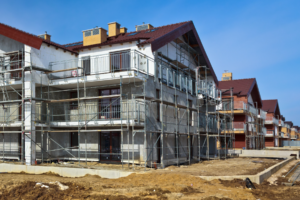
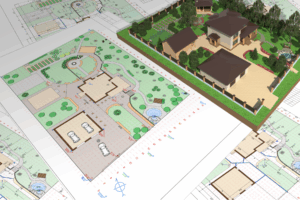
Defendant Quail Run Condominiums, LLC a/k/a Quail Run Condominiums, L.L.C. (the “Developer”), established a duplex-style condominium project in Calhoun County in 2004. On August 13, 2004, the Developer executed and recorded a Notice of Commencement indicating that construction of the project had begun. On September 16, 2004, the Developer recorded the Master Deed, formally creating the condominium. The Master Deed established 78 units, numbered 1 through 78, each assigned an equal percentage of value. The Condominium Subdivision Plan designated Units 1–6 as “must be built” and Units 7–18 as “need not be built.” However, Units 19–78 were not designated as either “must be built” or “need not be built,” despite the requirement under MCL 559.166(2)(j) and Mich Admin Code R 559.401(3) that such designations be expressly stated. It was undisputed that Units 45–78 (the “Undeveloped Units”) were never constructed or withdrawn from the condominium project within ten years of commencement of construction. By 2014, the statutory period under former MCL 559.167(3) had expired.
Failing to Label Units as “Must Be Built” may Eliminate Units under MCL 559.167
Because construction commenced in 2004, the court applied the 2002 version of MCL 559.167(3), which governed the duration of a developer’s right to construct undeveloped units. Former MCL 559.167(3) provided that if a developer does not complete development and construction of units identified as “need not be built” within ten years after commencement of construction, the developer may withdraw undeveloped portions not identified as “must be built.” However, if the developer does not withdraw those portions before expiration of the statutory period: …those undeveloped lands shall remain part of the project as general common elements and all rights to construct units upon that land shall cease. Section 67 therefore imposes a mandatory ten-year limitation on undeveloped portions not identified as “must be built,” after which development rights terminate by operation of law. The statute thus imposes a mandatory ten-year limitation on undeveloped portions not identified as “must be built,” after which development rights terminate by operation of law. Applying the statute’s plain language, the court concluded that the undeveloped units remained subject to Section 67’s ten-year expiration rule. Although the units were not expressly designated as either “must be built” or “need not be built,” they were undisputedly not identified as “must be built.” Under former MCL 559.167(3), that distinction is dispositive. The statute applies to all undeveloped portions of the project not identified as “must be built.” The developer’s failure to designate the units did not preserve its construction rights; it subjected those units to automatic reversion once the ten-year period expired. Because the undeveloped units were neither constructed nor withdrawn within ten years of commencement of construction in November 2004, the Court found that the Developer’s rights expired in 2014. When the statutory period ended, the undeveloped units reverted to general common elements by operation of law, and all rights to construct units upon that land ceased.
This Issue Has Not Yet Been Addressed in a Court of Appeals Decision.
Michigan appellate courts have repeatedly enforced former MCL 559.167(3) where units were expressly designated as “need not be built,” most notably in Cove Creek Condominium Association v Vistal Land & Home Development, LLC, 330 Mich App 679 (2019), and Elizabeth Trace Condominium Association v American Global Enterprises, Inc, 340 Mich App 435 (2022). Those cases involved properly designated units. Quail Run addressed a different statutory question: whether Section 67 applies when the master deed fails to designate units at all. Relying on the plain language of former MCL 559.167(3), the circuit court concluded that the absence of a designation does not remove units from the statute’s reach. Because the statute applies to “all undeveloped portions of the project not identified as ‘must be built,’” undesignated units remain subject to the same ten-year expiration framework. Quail Run reinforces what prior Section 67 decisions have consistently emphasized: development rights under the Michigan Condominium Act are strictly statutory and cease when the statute says they cease — not when a developer intends them to cease.
Practical Implications for Condominium Associations
The Quail Run decision provides several important takeaways for Michigan condominium associations:
- Undesignated Units Are Not Immune From Reversion. A developer cannot avoid the 2016 amendment version of MCL 559.167 by failing to comply with the designation requirements of MCL 559.166(2)(j) and Mich Admin Code R 559.401(3). The statute applies to “all undeveloped portions of the project not identified as ‘must be built.’” Units that lack a “must be built” designation fall within Section 67’s ten-year expiration framework.
- The Clock Starts at Commencement of Construction. Under the pre-amendment 2016 version of MCL 559.167, the ten-year period runs from the date construction commenced, not from later amendments to the master deed, not from restatements, and not from subsequent development activity. Boards should verify the recorded Notice of Commencement and calculate the statutory deadline accordingly.
- Reversion Is Automatic and Self-Executing. Under the original enactment of MCL 559.167, when the statutory period expires without construction or withdrawal, undeveloped land remains part of the condominium as general common elements by operation of law. However, under the current version of MCL 559.167, a vote and notice to the developer is required, so it is important to determine which version of MCL 559.167 applies.
- Development Rights Are Strictly Statutory. Condominium development rights exist only to the extent authorized by the Michigan Condominium Act. They do not survive beyond the statutory period because of drafting errors, omissions, or silence in the master deed.
Conclusion
The Quail Run decision confirms that condominium development rights expire when units are not properly designated as “must be built” or “need not be built” under the pre-2016 amendment version of MCL 559.167. When the statutory period passes without construction or withdrawal, undeveloped land remains general common elements by operation of law. Undeveloped condominium units can impact condominium associations in terms of accurately creating a budget, the ability to accurately fund reserves, determining voting rights, identifying insurance obligations, and the ability for purchasers to get financing under Fannie Mae and Freddie Mac lending guidelines. Accordingly, if the developer did not complete your condominium association, it is important to contact a community association attorney to determine if the undeveloped units still exist, and whether the pre-2016 amendment version of MCL 559.167 applies to your condominium.