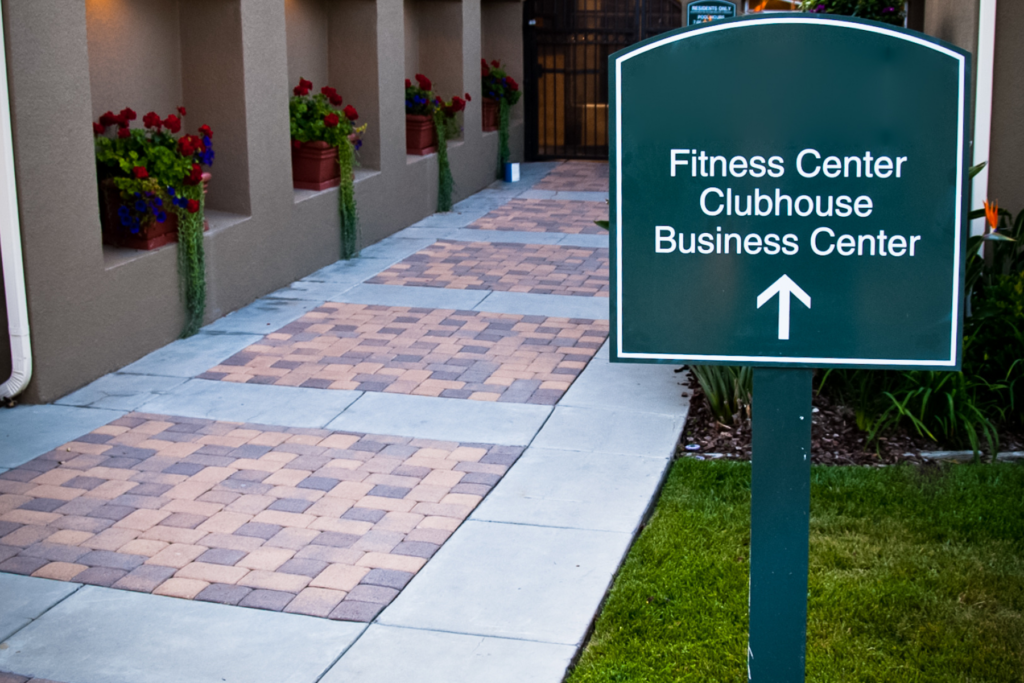
One reason individuals choose to live in a condominium is the amenities, such as a clubhouse, swimming pool, and tennis court. Condominiums located next to each other frequently share amenities, and issues such as how costs will be shared and who will make maintenance and repair decisions about the amenities are typically addressed in the master deeds or separate maintenance and operating agreements. What happens, though, when there is language in the master deed regarding the amenities and the condominium associations enter into another agreement without co-owner approval or amending the master deed? In Walden Hills II Condo Ass’n v Walden Hills Condo Ass’n, unpublished per curiam opinion of the Court of Appeals, issued Apr 9, 2025 (Docket No. 366707), the Michigan Court of Appeals held that a 1983 agreement between two condominium associations regarding a shared community building did not materially alter the rights of the co-owners and, therefore, the agreement was valid, even though it was not approved by the co-owners or recorded as an amendment to the master deed. This case provides instructive guidance to condominium associations when determining the scope of their authority regarding maintenance and cost agreements for shared amenities.
Facts
Walden Hills and Walden Hills II (a/k/a Summit View) were initially constructed as one apartment complex. A portion of the apartment complex, Walden Hills, was converted into a condominium in 1981. The remainder of the apartment complex was eventually converted into the Summit View condominium in 1988. The apartment complex included a recreational facility known as the “community building,” which consisted of a clubhouse and swimming pool, among other amenities. When Walden Hills was created in 1981, the community building was included within its boundaries; however, the developer wanted to ensure that the remaining apartment renters still had equal access to the community building. An easement granting the apartments a right to use the community building, along with a cost-sharing structure, was included in Walden Hills’s master deed. Then, in 1983, Walden Hills and the developer entered into a separate agreement, which again granted the apartments a right to use the community building and imposed the same cost-sharing structure, but it also delegated Walden Hills’s authority to maintain and operate the community building to a “governing committee,” whose six members would be equally represented from Walden Hills and the apartments. When Summit View was created in 1988, it stood in the apartments’ shoes, obtaining the right to use the community building and sit on the governing committee. As the Court of Appeals describes, “Summit View and Walden Hills shared the community building with no issue for over 30 years.” This harmony abruptly ended in 2020 when Walden Hills alleged that the 1983 agreement (which had been amended in 1985) was invalid and unenforceable because it claimed that the agreement amended the language within its master deed, materially altering the rights of its co-owners, and had not been approved by 2/3 of them.
The 1983 Agreement Did Not Amend the Master Deed or Materially Alter the Right of the Co-owners
The Court of Appeals rejected Walden Hills’s argument and held that the 1983 agreement did not materially alter the rights of Walden Hills’s co-owners. To reach this decision, the court first reviewed the amendment provisions from the Michigan Condominium Act at MCL 559.190, noting that not every amendment requires co-owner approval. The court stated: MCL 559.190(1) provides that condominium documents may be amended by the board of directors without the consent of the co-owners, so long as those amendments do not “materially alter or change the rights of a co-owner or mortgagee”; however, MCL 550.190(2) provides that an amendment to the condominium documents that does materially alter the rights of a co-owner or mortgagee requires approval from two-thirds of the co-owners. It then looked at Walden Hills’s condominium documents and the powers granted to its board of directors. The court observed that Walden Hills’s board of directors had express authority to enter into contracts to assist in the condominium’s maintenance, management, and operation, stating: Nowhere in the master deed, articles of incorporation, or bylaws is there a prohibition of the board entering into an agreement with its adjoining condominium association—which enjoys an easement over the recreational areas—to share the administration, regulation, maintenance, and associated costs related to the recreational area th[r]ough the creation of a governing committee. The court next analyzed the 1983 agreement, specifically the delegation of Walden Hills’s authority to a governing committee, to determine whether the delegation materially altered the co-owners’ rights and required their approval. The court decided that it did not. First, the court noted that Walden Hills’s master deed granted only a right to use the community building but did not address who would be responsible for operating it. Rather than altering any language in the master deed, the 1983 agreement filled in gaps not addressed by the master deed. Second, the court rejected Walden Hills’s argument that the creation of the governing committee impermissibly expanded the easement in the master deed from a “right to use” to a “right to control.” The court stated that the easement language, which required Summit View to share maintenance, repair, and replacement expenses for the community building, evidenced that the easement was not limited to only a “right to use:” If the developer’s intent was to only provide the apartment renters, and eventually their successor Summit View co-owners, a right to use the building, and not a right to control the building, including a cost-sharing provision for repairs would not make sense. It is clear from this provision that the developer intended for the co-owners of Walden Hills and the renters to have both use and control of the shared community building, provided that they share costs. Between the contractual authority of Walden Hills’s board of directors and the absence of any alteration of the co-owners’ material rights, the court found that the 1983 agreement was valid and enforceable. Key Takeaways for Condominium Associations The decision in this case provides important lessons for condominium associations with shared amenities or other common areas:
- Not all amendments require co-owner approval. While many amendments to condominium documents materially alter or change the rights of the co-owners (such as changes in leasing restrictions, allocations of maintenance responsibility, and use restrictions), Walden Hills II (Summit View) serves as a reminder that there are amendments that will not require co-owner or mortgagee approval under MCL 559.190(1) because they do not have a material effect.
- Boards of directors can make decisions without co-owner approval. Articles of incorporation and condominium documents outline what the board may do on behalf of the condominium association, without requiring a prior co-owner vote or approval. This can include obtaining insurance, adopting rules and regulations, acquiring or selling property, obtaining loans, or, as in Summit View, entering into an operating agreement in which the association agrees to share control of one of its facilities.
- Silence on an issue may provide an opportunity for an agreement, rather than an amendment. As the Court of Appeals highlighted, the original easement’s language in the master deed addressed only who could use the community building, but it was silent on how the building was to be operated. This silence provided the parties with an opportunity to enter into a separate agreement to address the operational issues, serving as a gap-filler rather than as an amendment to the original easement.
- Sharing costs may imply shared decision-making. The original easement’s language did not provide the apartments, or later Summit View, with any right to control the community building; however, the Court of Appeals highlighted that the requirement to share actual costs, rather than to pay a fixed use fee, indicated an intent that the parties should share in the decision-making of the building. This may provide a persuasive argument for other condominium associations that are paying actual costs under shared maintenance agreements without a right to participate in decision-making.
- Maintenance, operating, and cost-sharing agreements should be drafted clearly to avoid disputes. Unfortunately, many maintenance, operating, and cost-sharing agreements are poorly drafted and do not withstand disputes because they fail to address the full scope of the parties’ relationship. Some key areas that the parties should make sure are covered at the outset include:
- What amenities, or other land, will be shared and who will be allowed to use it
- Who is going to be responsible for maintaining, repairing, and replacing the shared areas, including how maintenance, repair, and replacement decisions will be made
- What costs will be shared and how are they going to be allocated among the parties
Need Help with Shared Amenities or Your Cost-Sharing Agreement?
If your condominium association is experiencing difficulty with shared amenities or a cost-sharing agreement, the attorneys at Hirzel Law, PLC can review and enforce existing agreements, draft and negotiate clear agreements, and advise on what will require co-owner approval to help avoid disputes and costly litigation.