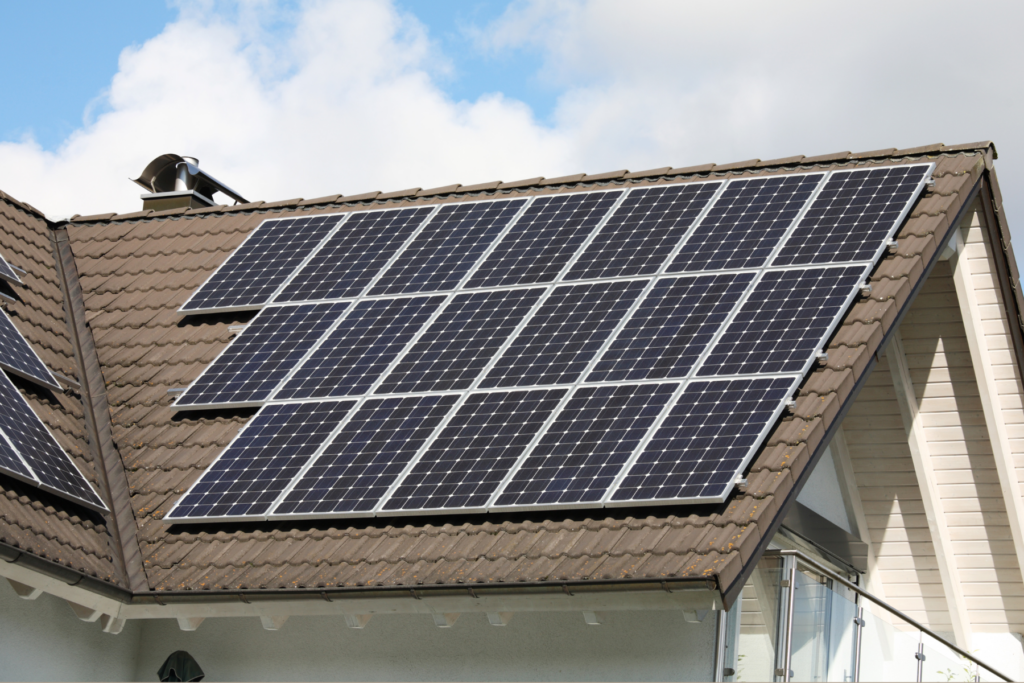
The Homeowners’ Energy Policy Act, MCL 559.301 et seq. (“HEPA”) was enacted into law with the aim of removing condominium associations’ and homeowners associations’ traditional architectural authority over solar panels and other energy-saving improvements or modifications. As of April 1, 2026, HEPA requires all homeowners associations in Michigan to adopt a written solar energy policy. HEPA provides guidance on the content of the solar energy policy, which focuses on the process and procedure for the installation of solar panels. While HEPA does not require that the solar energy policy address energy-saving improvements or modifications, that does not necessarily prohibit associations from adopting such regulations. This article discusses key considerations for Michigan condominium associations and homeowners associations when adopting rules to regulate energy-saving improvements.
What Energy-Saving Improvements Does HEPA Cover?
HEPA does not provide a clear definition of what constitutes an energy-saving improvement or modification, unlike the detailed definition for a solar energy system (i.e., solar panels). Instead, Section 3(c) of HEPA, MCL 559.303(c), provides examples of energy-saving improvements and modifications:
(i) A clothesline.
(ii) Air source heat pumps.
(iii) Ground source heat pumps.
(iv) Insulation.
(v) Rain barrels.
(vi) Reflective roofing.
(vii) Energy-efficient appliances.
(viii) Solar water heaters.
(ix) Electric vehicle supply equipment.
(x) Energy-efficient windows.
(xi) Energy-efficient insulation materials.
Generally, an energy-saving improvement or modification is anything designed to reduce energy or electricity use.
How HEPA Treats Attached Condos vs. Site Condos and Subdivisions
Beyond this section, this article focuses on site condominiums and subdivisions because HEPA largely does not affect attached condominiums. Attached condominiums usually come in two configurations: (1) townhomes (duplexes, triplexes, quadplexes, etc.) and (2) single buildings with “apartment-style” units (one building with units next to and on top of each other). Whether these attached condos are townhomes or apartment-style, they share a common feature: multiple units under a single roof with a general common element area outside of the unit.
Under Section 13 of HEPA, MCL 559.313, the statute “does not apply to either of the following in a common area or on a shared roof: (a) The replacement, maintenance, installation, or operation of an energy-saving improvement or modification. (b) The installation of a solar energy system.” Because townhomes and apartment-style condos typically have shared roofs and common-area exteriors, attached condo associations are generally able to prohibit energy-saving improvements. It is important to note, though, that attached condominium associations are still required to adopt a written solar energy policy under Section 9 of HEPA, MCL 59.309. Accordingly, the rest of this article will apply to site condominiums and subdivisions that involve a unit or lot, which is a parcel of land owned by the co-owner or owner.
What HEPA Prohibits vs. What Michigan HOAs Can Still Regulate
The enacting section of HEPA states that the statute’s aim is, in part, “to invalidate certain provisions in homeowners’ association agreements that prohibit the replacement, maintenance, installation, or operation of certain energy-saving improvements or modifications or the installation of solar energy systems…” This is shown in Section 5(1) of HEPA, MCL 559.305(1), which states:
Any of the following in a homeowners’ association agreement is invalid and unenforceable as contrary to public policy:
(a) A provision that prohibits, or requires the approval of a homeowners’ association for, a member to replace, maintain, install, or operate an energy-saving improvement or modification.
(b) A provision that compels, or requires association approval for, a member to make auxiliary changes needed for the installation of an energy-saving improvement or modification.
It is further shown in Section 7 of HEPA, MCL 559.307, which states, “A provision in a homeowners’ association agreement or the policy adopted under section 9(1) that prohibits or has the effect of prohibiting the installation of a solar energy system is invalid and unenforceable as contrary to public policy.”
Except as provided in Section 9(1) of HEPA, MCL 559.309(1), a condominium association or homeowners association cannot prohibit a co-owner or owner from installing an energy-saving improvement within their unit or lot. Likewise, a condominium association or homeowners association cannot require approval for the installation of an energy-saving improvement. Accordingly, the following examples should be avoided in a solar energy policy under MCL 559.309, or a similar policy for energy-saving improvements and modifications:
- A co-owner must obtain the express written approval of the association before installing an energy-saving improvement or modification.
- An owner cannot install an energy-saving improvement or modification unless it is first approved by the architectural control committee.
- Owners may not use clotheslines.
A crucial factor in whether a condominium association or homeowners association has authority to regulate energy-saving improvements is the association’s governing documents. In a previous article, 3 Things Michigan Condo Boards Must Know Before Adopting Rules and Regulations,an association’s rules and regulations must implement or interpret existing restrictions from the governing documents. Rules and regulations or a policy regarding energy-saving improvements are no different. In order to impose any of the regulations discussed below, the condominium’s master deed and bylaws, or the homeowners association’s declaration, must address the association’s general authority for the regulation.
Regulating Maintenance, Repair, Replacement, and Insurance of Energy-Saving Improvements
Condo associations and homeowners associations may be concerned that, once installed, an energy-saving improvement will not be maintained or that it may be damaged. Master deeds for site condominiums will often require the co-owner to maintain, repair, replace, and insure all improvements within their unit. The governing documents for HOAs, such as declarations, covenants, CC&Rs, etc., may also include this requirement. This type of maintenance-responsibility requirement applies equally to energy-saving improvements and to other types of improvements or modifications. As long as the governing documents require improvements to be maintained, repaired, replaced, and insured, an association’s policy may contain a simple statement that energy-saving improvements must be maintained, repaired, replaced, and insured in accordance with the governing documents.
Regulating the Location of Energy-Saving Improvements
A number of associations have an “out of sight, out of mind” approach to energy-saving improvements. To regulate the location of an energy-saving improvement, look for a provision in the association’s governing documents that expressly allows the association to regulate the location of improvements on a unit or lot. Another applicable provision that may be present in the governing documents is that improvements must be screened from the view of the road. With the authority to regulate the location or visibility of improvements, a board may be able to impose location requirements for energy-saving improvements. Some examples include:
- Clotheslines may be used in the backyard of a lot and must be removed daily by sunset. Clothes may not be hung on the deck railing.
- Rain barrels may be attached to downspouts in the rear of the home or screened from view if attached to downspouts on the side of the home.
- Electric vehicle chargers should be installed inside a garage.
Regulating Design and Color of Energy-Saving Improvements
Another concern that boards may have with energy-saving improvements is the design and color that an owner may choose. Condominium associations and homeowners associations may have general architectural control authority to regulate improvements for aesthetic reasons. This authority should allow the association to regulate the design and color of energy-saving improvements. Such regulations may include:
- A clothesline should be an umbrella-style clothesline that may be removed when not in use. Any clothesline that involves a line running between two poles must be removed when not in use.
- The color of an energy-saving improvement must be complementary to the residence.
- Rain barrels should be black, gray, or brown. White rain barrels can cause algae growth and should not be used. A rain barrel must have a secure lid and screen to prevent mosquito growth.
Practical Takeaways for Michigan Community Associations Under HEPA
While the Michigan Homeowners’ Energy Policy Act invalidates traditional architectural controls that prohibit or require approval for energy-saving improvements, Michigan condominium associations and homeowners associations still retain meaningful regulatory authority. Associations can require energy-saving improvements to be maintained, repaired, replaced, and insured as needed; to be placed in an inconspicuous place or otherwise screened from view; and to have a design and color that are relatively harmonious with the community. But any regulation adopted by the association must be based on existing authority from the master deed and bylaws or declaration, as with any other rules and regulations.
Associations that are considering imposing regulations on energy-saving improvements should remain cautious, avoiding outright prohibition or regulations so strict that it becomes effectively impossible for owners to install energy-saving improvements. Condominium associations and homeowners associations should review proposed regulations with an experienced community-association attorney to ensure the regulations are supported by the governing documents and do not violate HEPA. The experienced Michigan community association attorneys at Hirzel Law are available to assist condominium associations and homeowners associations across Michigan with HEPA compliance and other governance matters.