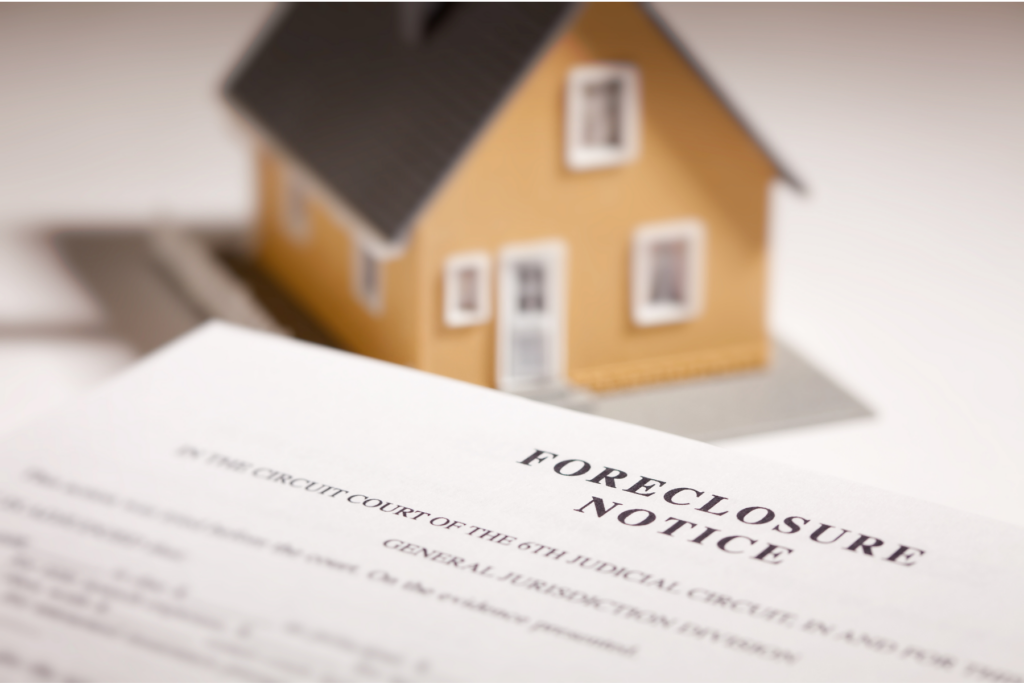
When a co-owner falls behind on assessments and does not resolve the delinquency after the association records a lien, the condominium association must determine the most effective way to recover the unpaid balance.
While many Michigan homeowner associations and condominium associations’ documents authorize multiple collection remedies, choosing the right one requires more than simply pursuing the most aggressive option.
The association should first evaluate the property’s financial condition, the co-owner’s circumstances, and the remedies authorized by the governing documents.
Foreclosure or Money Judgment: What Collection Remedies Does a Michigan Association Have?
Once the deadline in the Notice of Lien expires without payment, an association may have several collection remedies available, depending on the governing documents. These may include:
- A lawsuit seeking a personal money judgment against the co-owner.
- Judicial foreclosure of the association’s lien.
- Foreclosure by advertisement, if authorized by the governing documents.
Because every association’s governing documents differ, the available remedies should always be confirmed before proceeding.
The Foreclosure Review
Before recommending whether an association should pursue foreclosure or another collection remedy, attorneys will often conduct a foreclosure review. The purpose of this review is to determine whether foreclosure is likely to result in a meaningful recovery and whether another collection method would be more cost-effective. A foreclosure review generally involves four key steps.
Step 1: Bankruptcy Search
The first step is confirming whether the co-owner has filed for bankruptcy protection. A bankruptcy filing triggers an automatic stay that halts most collection activity, so it must be ruled out before the association proceeds with any remedy.
Step 2: Title Examination
The property’s title is reviewed to identify any recorded interests that may affect the association’s lien.
This typically includes:
- Reviewing recorded mortgages to determine which mortgages are senior to the association’s lien.
- Identifying any state or federal tax liens against the co-owner or homeowner that may affect the property’s title.
- Obtaining copies of recorded mortgages or tax liens when necessary for further analysis.
Step 3: Review of Delinquent Property Taxes
The association should also determine whether there are unpaid property taxes and whether the property may be approaching tax foreclosure. Delinquent property taxes can impact the value of the association’s lien and should be considered before deciding to foreclose.
Step 4: Evaluating the Property’s Equity
Perhaps the most important part of the foreclosure review is determining whether sufficient equity exists. As part of this evaluation, the property’s State Equalized Value is often reviewed as a starting point for estimating market value. Additional valuation sources, such as Zillow, RedFin, and Homes, may also be used, although those estimates should be viewed with caution because they may not accurately reflect the property’s true market value.
After estimating the property’s value, it is best to compare it against outstanding mortgages, delinquent property taxes, and other superior liens to determine the available equity.
Comparing the Timeline and Costs between Foreclosure and Money Judgment
When deciding between a money judgment, judicial foreclosure, and foreclosure by advertisement, the association should consider not only the likelihood of recovery but also the anticipated timeline and cost of each remedy.
A lawsuit for money judgment and a judicial foreclosure generally take approximately five to twelve months, although the timeline varies depending on the court’s docket, the complexity of the case, and whether the matter is contested. These options can generally be expensive, with attorney’s fees and litigation costs often ranging from $2,000.00 to $5,000, or more, depending on the case.
By comparison, foreclosure by advertisement when authorized by the association’s governing documents is the most cost-effective and efficient collection remedy. It involves fewer procedural delays and lower litigation costs than judicial foreclosure. Accordingly, when the foreclosure review indicates that the property has sufficient equity and no other factors weigh against proceeding, foreclosure by advertisement is often recommended.
Foreclosure is only worthwhile if sufficient equity remains after satisfying interests that have priority over the association’s lien. A property with substantial mortgage debt, delinquent taxes, or other superior interests may leave little or nothing available to satisfy the association’s claim.
Ultimately, each case should be handled on a case-by-case basis. The appropriate remedy depends on the results of the foreclosure review, the remedies authorized by the governing documents, the amount of available equity, and the co-owner’s financial circumstances.
When Is Foreclosure the Better Option for a Michigan Condominium Association?
If the foreclosure review indicates that sufficient equity exists after accounting for senior liens and taxes, foreclosure may be the most effective collection remedy. Foreclosure allows the association to enforce its lien against the property and may ultimately result in payment of the delinquent assessments or recovery through the foreclosure process.
When Is a Money Judgment the Better Option?
If the foreclosure review reveals little to no available equity, foreclosure may not be the best option. Even if the association successfully forecloses, insufficient equity may prevent it from recovering the delinquent balance or obtaining title to the property.
In those circumstances, pursuing a money judgment may be the better course of action. A money judgment is commonly filed in district court when the amount sought falls within the court’s jurisdictional limits.
A money judgment is appropriate when:
- The co-owner or homeowner has known employment or other assets that may be garnished.
- The association has no interest in acquiring title to the property through foreclosure.
Quick Exercise: Foreclosure or Money Judgment?
Imagine an association is owed $5,000 in delinquent assessments, interest, and collection costs. The property is estimated to be worth $175,000. A title review shows a mortgage of $50,000, which is found to have priority over the association’s lien, $2,000 in unpaid property taxes, and no other significant liens with priority. What would you recommend: foreclosure or money judgment?
Here, foreclosure is most likely the better option. There is substantial equity in the property and relatively few senior liens, which would allow the association to recover the delinquent balance.
Now change the facts slightly: the property is still worth $175,000, but there is a $170,000 mortgage, and other significant unpaid property taxes and additional liens.
Here, there is not enough equity to recommend proceeding with foreclosure. In this case, money judgment may be the better option. This is where the association would consider the co-owners or homeowner’s financial circumstances, including whether the co-owner or homeowner has a source of income and other assets that can be easily garnished.
Can the Association Give the Co-Owner One More Chance?
Typically, by the time an account reaches the foreclosure or money judgment stage, the association has already attempted other collection efforts, such as an initial demand letter or a notice of lien letter.
Depending on the circumstances, however, the association may choose to give the delinquent co-owner or homeowner another opportunity to resolve the outstanding balance. In a situation like this, a final demand letter could be sent, giving the co-owner or homeowner additional time to make payments or respond.
Conclusion
Choosing between foreclosure and a money judgment is ultimately an equity question. Michigan condominium and homeowners associations that conduct a thorough foreclosure review, confirm the remedies authorized by their governing documents, and match the remedy to the property’s equity and the owner’s financial circumstances will recover delinquent assessments faster and at lower cost.
If your association is dealing with a delinquent co-owner or homeowner and is unsure whether a money judgment or foreclosure is the appropriate collection remedy, our experienced attorneys can help. At Hirzel Law, PLC, we can review the association’s governing documents, the property’s title, existing mortgage’s, unpaid property taces, estimated equity, and other relevant information to help determine the most appropriate path to recovery. Contact our experienced attorneys at Hirzel Law, PLC to discuss your association’s collection options.