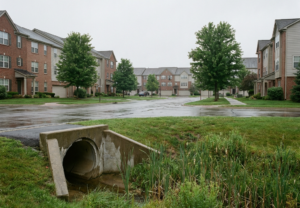
Responsibility for road maintenance usually depends on three questions. Is the road public or private? What do the recorded land documents say? What duties do the association’s governing documents assign to the board? Before approving a repaving contract or charging owners, confirm who controls the road. Check whether a public agency accepted it. Then determine whether the association must provide routine maintenance, full reconstruction, or something in between.
Boards can answer these questions in three steps. First, determine whether the road is public or private. Second, identify who owns or controls it and what maintenance duties apply. Third, review the governing documents: confirm the board’s authority to assess owners and check whether owner approval is required.
How Michigan HOA and Condo Boards Can Verify Who Owns a Private Road
1. Check the recorded plat or condominium subdivision plan
Michigan’s Land Division Act, commonly called the Plat Act or MCL 560.101 et seq., governs the dedication and acceptance of roads by public or governmental agencies. If the road was dedicated to the public, verify acceptance by the applicable public/governmental agency. Dedication alone does not make a road public. The applicable agency must also accept the dedication. Only then does the road become public and the agency become responsible for maintenance. See Kraus v. Michigan Dep’t of Commerce, 451 Mich 420; 547 NW2d 870 (1996).
To verify acceptance, review a certified copy of the recorded plat and/or any recorded municipal resolution or ordinance affecting the road. Section 255(b) of the Plat Act may create a presumption that the applicable agency accepted dedicated land after 10 years. Evidence of a timely withdrawal or non-acceptance of such dedication may rebut that presumption.
If the road is accepted by the applicable public agency, then the county road commission (for townships) or the city/village generally maintains it.
2. Review the governing documents
If the road is not public, it may be part of an HOA’s common areas or a condominium’s common elements. The applicable governing documents generally identify who owns or controls these areas and the association’s authority to fund maintenance through assessments.
For an HOA, the declaration, bylaws, and related governing documents determine the association’s authority and obligations regarding roads. For a condominium association, the master deed, condominium bylaws, and related condominium documents serve that role.
3. Check for recorded easements
Some communities have access over a road pursuant to an easement owned by the developer or a neighboring owner. In that case, check both the easement terms and the association’s governing documents regarding maintenance responsibilities and costs.
Who Maintains Public Roads in Michigan?
Once a public or governmental agency accepts a road, that agency generally becomes responsible for maintenance. In a township, the county road commission usually has that duty. In a city or village, the city or village generally maintains the road.
Under Michigan law, the responsible agency must keep the road in reasonable repair for public travel. This duty comes from MCL 691.1402(1) of the Governmental Tort Liability Act and MCL 224.21(2) of the Public Highways and Private Roads Act.
Must a Private HOA Road Meet Township Standards? What McGue Tells Michigan Boards
In McGue v. Glenbrook Beach Association, the court addressed maintenance standards for private association roads. The unpublished Michigan Court of Appeals opinion was issued March 6, 2018 (Docket No. 337785). The court concluded that the association did not have to meet township-ordinance standards unless its governing documents expressly required them. The decision also indicates that individual owners generally may not enforce municipal road ordinances against the association.
McGue offers a practical rule for both HOAs and condominium associations. The governing documents must expressly require compliance with township road standards. Without that requirement, the board has discretion to choose reasonable maintenance standards. It is not compelled to meet governmental specifications for private roads.
Owning a Private Road vs. Maintaining It
Owning or controlling land does not mean the association must meet a particular maintenance standard. An HOA declaration, or a condominium master deed and bylaws, may authorize road maintenance and budgeting. But those documents may also limit what “maintenance” includes.
What “road maintenance” usually covers: snow and ice removal and patching
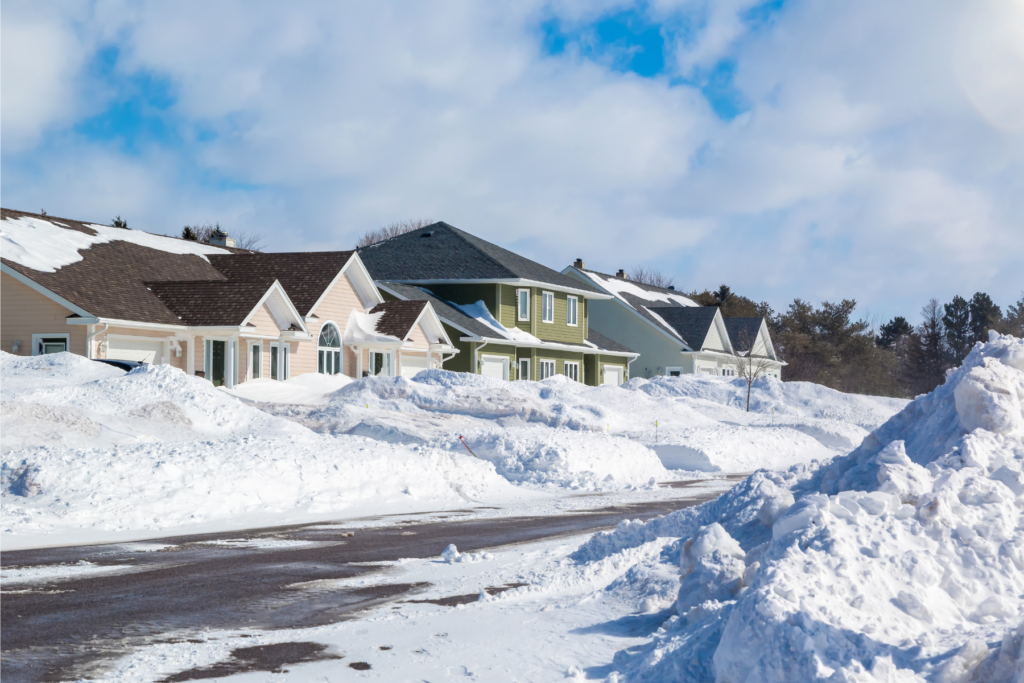
An HOA’s declaration or a condominium’s master deed and bylaws may define association “road maintenance” to include snow and ice removal and necessary patching. That language signals a duty to provide those services, but stops short of full road reconstruction. If a public agency accepts the road, that agency bears the statutory duty to keep it in reasonable repair for public travel.
If the governing documents impose only those limited duties, the board likely cannot fund full reconstruction without a properly authorized special or additional assessment.
When Can a Michigan HOA or Condo Board Assess Owners for Road Repairs?
- Authority to assess: Review the HOA’s declaration and bylaws, or the condominium’s master deed and bylaws. These documents typically address the association’s authority to levy general, regular, additional, or special assessments. Such assessments may fund maintenance of common areas or common elements, including roads.
- Special assessments and thresholds: HOA and condominium governing documents may allow additional or special assessments for deficits and emergencies. They may also allow them to replace common areas or common elements. Other provisions may allow assessments for unusual expenses that benefit fewer than all owners or units. Larger projects may require owner approval at the threshold stated in the applicable documents.
- Standard of maintenance: An HOA or condominium association generally does not have to maintain private roads to township specifications unless its governing documents expressly incorporate municipal standards. Without that requirement, the association may exercise business judgment when choosing the methods and scope of maintenance.
What Boards Should Do Before Approving Road Work
- Map the road’s legal status: Review the community’s recorded land documents. Check whether roads were dedicated to the public and whether acceptance occurred. Determine whether the roads are designated as common areas or common elements, and whether access or maintenance easements allocate costs to owners or third parties.
- Review the governing documents closely
- HOA declaration or condominium master deed: Identify the association’s authority to levy assessments. Check whether the roads are common areas or common elements. Look for provisions that define “road maintenance” or address public rights-of-way. These provisions may authorize road maintenance while limiting its scope.
- Bylaws: Confirm the board’s authority and procedures for levying regular, additional, or special assessments. Check any owner approval thresholds. Also review provisions for emergencies, deficits, or replacement of common areas or common elements.
- Articles of incorporation and other governing documents: Check whether any provision requires compliance with municipal road ordinances or imposes a particular maintenance standard. Without such language, the association may retain discretion over private-road maintenance standards.
- Evaluate funding options. If reserves are insufficient, consider the regular, additional, or special assessments authorized by the applicable HOA or condominium documents. A board may also consider a Special Assessment District (SAD). An SAD may finance work over time through the tax roll, in addition to assessments authorized by the governing documents.
Key Takeaways on Private Road Maintenance in a Michigan HOA
- Ownership and maintenance are different questions. A private road may lie within an HOA’s common area or a condominium’s common elements. Even so, the association carries only the maintenance obligations stated in the applicable governing documents.
- Township standards generally do not apply to an HOA’s or condominium association’s maintenance of its private roads unless the applicable governing documents say otherwise.
- Dedication without acceptance is not enough. A road becomes the public agency’s responsibility only after the agency accepts the dedication.
- Assessments must comply with the applicable HOA or condominium governing documents. Large projects may require owner approval or alternative financing, such as an SAD.
Boards that confirm the road’s legal status, read their governing documents closely, and follow the required assessment procedures before signing a repaving contract will be in a far stronger position to avoid disputes with owners.
Frequently asked questions
How do we determine whether a road is public or private?
Review the recorded plat or condominium subdivision plan, any acceptance records, and applicable easements. A public dedication alone is not enough; acceptance by the governmental agency is critical.
Does owning or controlling a private road mean the association must fully repave it?
Not necessarily. The HOA or condominium governing documents may limit the association’s obligation to services such as snow and ice removal or patching.
Must a private association road meet township standards?
Generally not unless the association’s governing documents expressly incorporate those standards.
Which documents should the board review?
For an HOA, review the declaration and bylaws. For a condominium, review the master deed and condominium bylaws. Also examine the recorded land documents and any easements. Check the assessment provisions and approval requirements.
Can the association assess owners for road work?
Only as authorized by the applicable governing documents. The project may require a regular, additional, or special assessment, and possibly owner approval.
When does a municipality become responsible for the road?
Generally, when the appropriate public agency accepts the road dedication. The Plat Act may create a rebuttable presumption of acceptance after 10 years.
What if reserves are insufficient for major road work?
Consider the assessment options authorized by the governing documents. Also consider whether an SAD may offer another way to finance the project over time.
Talk to a Michigan Community Association Attorney Before You Repave
Before your board signs a road contract or levies an assessment, the experienced Michigan community association attorneys at Hirzel Law can review your recorded plat or condominium subdivision plan, acceptance records, easements, and governing documents. We can then outline your association’s maintenance obligations and the standards that apply, explain its assessment authority and approval requirements, and advise whether an SAD makes sense. Contact Hirzel Law to schedule a document review and action plan tailored to your community.