The start of a new year is a natural time to look forward to what the future holds. But before everyone starts focusing on their resolutions, let’s take a moment to look back on what happened in 2025 from a legislative standpoint. This past year saw a number of new statutes that affect condominium associations and homeowners associations in Michigan. This legislative update highlights three changes in the law that will impact condo associations and HOAs in 2026 and the years to come: the Homeowners Energy Policy Act becoming effective, the amendment to the Marketable Record Title Act, and the exemption under the Corporate Transparency Act.
Homeowners’ Energy Policy Act
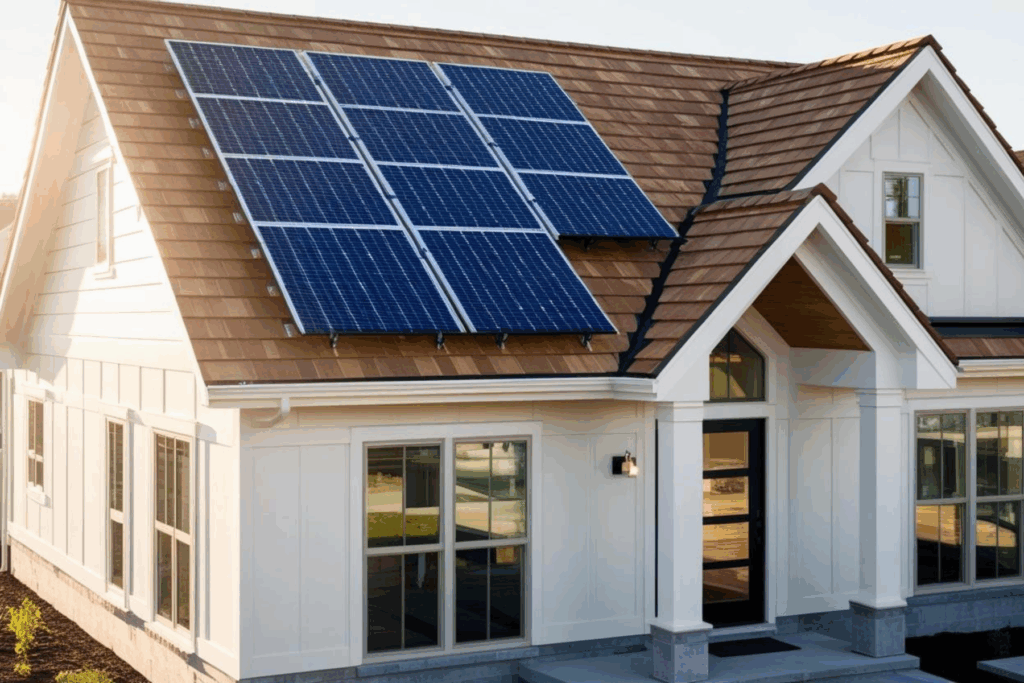
At the top of this year’s 2025 legislative update is the Homeowners’ Energy Policy Act, MCL 559.301, et seq. (“HEPA”), which became effective on April 1, 2025. Under HEPA, a homeowners association cannot restrict or prohibit an owner from installing a solar energy system (i.e., solar panels) or other energy-saving improvements or modifications. HEPA also creates a framework that homeowners associations must follow when reviewing applications to install solar panels, requires all homeowners associations to adopt a solar energy policy regarding solar panels, and limits the reasons why homeowners associations may deny an owner’s request to install solar panels. HEPA explicitly refers to homeowners associations as being subject to the provisions and restrictions. However, there is no definition of what a homeowners association is. Does HEPA also apply to condominium associations? Cooperatives? Summer resorts? There is no clear answer in the statute and, as of now, no lawsuits have been filed seeking clarification from a court. Condominium associations, co-ops, and summer resorts may nonetheless voluntarily comply with HEPA to avoid liability for noncompliance. HPEA allows an owner to bring a lawsuit against a homeowners association for failing to comply with the statute, and, if successful, the owner may be able to recover their attorney’s fees and costs from the homeowners association. Given this potential penalty, community associations other than HOAs may voluntarily comply with HEPA to avoid liability. Two previous articles, A Michigan HOAs’ Guide to Solar Panels and Energy-Saving Improvements under the Homeowners’ Energy Policy Act and Michigan Homeowners’ Energy Policy Act Takes Effect April 1, 2025: Does Your HOA Have a Solar Energy Policy?, address the substance and requirements of HEPA. As the second article discusses, every homeowners association in Michigan is required to adopt a solar energy policy statement by April 1, 2026. That deadline may seem far away right now, but it will be here before you know it. Homeowners associations, condominium associations, cooperatives, and summer resort associations should contact a community association attorney to discuss how HEPA affects their community and arrange for a solar energy policy statement.
Marketable Record Title Act
Next up on the 2025 legislative update is the amendment to the Marketable Record Title Act, MCL 565.101 et seq. (the “MRTA”), that became effective on September 29, 2025. Under previous versions of the MRTA, restrictive covenants found in a property’s chain of title that had not been referenced by liber and page number within the last 40 years would automatically be extinguished. Condominiums were typically not at risk of having their master deed and bylaws extinguished under the MRTA because the Michigan Condominium Act requires deeds for condominium units to reference the liber and page number of the master deed. MCL 559.164. The MRTA largely impacted HOAs because, prior to 2018, the standard practice was for a property’s deed to state that the property was “subject to easements and restrictions of record,” or similar language. An earlier article, The 2025 Marketable Record Title Act Amendment: A Guide for Michigan Condos and HOAs, discusses the changes of the 2025 amendment to the MRTA in depth. An overview of the 2025 amendments to the MRTA, and the effects on condos and HOAs, is as follows:
- Condominium associations are specifically exempt from the MRTA, do not need to file a notice of claim, and their master deeds are not at risk of extinguishment.
- Homeowners associations do not have uniform treatment under the MRTA:
- Homeowners associations that have original governing documents that were recorded before January 1, 1950, and that have not recorded a notice of claim since March 28, 2019, may need to record a notice of claim by September 29, 2027.
- Homeowners associations that have original governing documents that were recorded on or after January 1, 1950, are exempt from the MRTA, do not need to file a notice of claim, and their governing documents are not at risk of extinguishment.
Homeowners associations that are unsure of whether they need to record a notice of claim should contact our community association attorneys to review the governing documents to discuss whether a notice of claim should be pursued.
Corporate Transparency Act
The final legislative update for 2025 put an end to the on-again, off-again saga of the Corporate Transparency Act (“CTA”). The CTA is a federal law enacted in 2021 that was aimed at addressing money laundering in the United States. When the CTA was first enacted, it required domestic reporting companies to submit personal information concerning the beneficial owners of the company. The term “domestic reporting company” was sufficiently broad that nearly all condominium associations and homeowners associations were subject to the CTA, and therefore, the members of an association’s board of directors were required to submit their personal information to the Federal Crimes Enforcement Network (“FinCEN”). The CTA requires domestic reporting companies to submit a beneficial owner information form between January 1, 2024 and January 1, 2025. At the end of 2024 and into 2025, several lawsuits and court decisions concerning the CTA were made, with outcomes alternating between the CTA being unconstitutional and unenforceable and the CTA being constitutional and enforceable. On March 26, 2025, FinCEN issued an interim final rule exempting all entities created in the United States from the reporting requirements. Accordingly, condo associations and HOAs that are Michigan nonprofit corporations are not required to report the personal information of their directors to FinCEN.
Takeaways
Homeowners’ Energy Policy Act: All community associations, whether condos, HOAs, co-ops, or summer resorts, should be aware that owners may have the ability to install solar panels and other energy-saving improvements or modifications. Additionally, the time by which associations are required to adopt a solar energy policy statement is nearing. Associations with questions about responding to an owner’s request to install solar panels or adopting a solar energy policy statement should contact our experienced community association attorneys. Marketable Record Title Act: HOAs with governing documents that were recorded after January 1, 1950, and condo associations do not need to take any further action after the 2025 amendment to the MRTA. HOAs that have governing documents that were recorded before January 1, 1950, should have a discussion with one of our community association attorneys about recording a notice of claim before September 29, 2027. Corporate Transparency Act: At this time, condominium associations and homeowners associations are no longer required to provide the personal information of their Board members. Nonetheless, FinCEN removed the reporting requirement through a rule, which may be changed in the future. What’s Coming in 2026: We anticipate that a bill will be proposed in 2026 that would require condominium associations that meet certain criteria to have a reserve study conducted periodically by a qualified professional. Although expected, this bill has not yet been introduced to the Michigan legislature. Stay tuned for an overview of the reserve study bill once it is introduced.