In Vansteenhouse v Winslow, issued June 28, 2016 (Docket No. 326224) (Unpublished Opinion) the Michigan Court of Appeals was required to determine whether a property owner violated deed restrictions by having a camper on their property. The deed restrictions indicated, “All lots sold within said Subdivision are to be used for residential purposes only….” The restrictions also stated that “[a]ll buildings shall be of a permanent nature….” The restrictions did not make any mention of campers, recreational vehicles, or trailers.
The court relied on Bloomfield Estates Improvement Ass’n, Inc v City of Birmingham, 479 Mich. 206, 215; 737 NW2d 670 (2007), which held that the phrase “strictly residential purposes only” in a restrictive covenant meant that the use of land was restricted to “homes where people reside.” The Court held that parking a camper on a lot for four months and using it for periodic camping activities is not consistent with the “usual, ordinary and incidental use of property as a place of abode….” Wood v Blancke, 304 Mich. 283, 288–289; 8 NW2d 67 (1943). Accordingly, the Court of Appeals held that the trial court was correct in determining that the defendant violated the deed restrictions.
While the trial court was affirmed in holding that the use of a recreational camper violated the deed restrictions regarding residential use, the Court of Appeals indicated that the trial court incorrectly ruled that the use of the camper violated the deed restriction that required all buildings to be of a permanent nature. Specifically, the Court held that a term not defined by a deed restriction is defined by “its commonly used meaning.” Bloomfield Estates, 479 Mich. at 215. The Court indicated that a “building” was defined as a “‘relatively permanent, essentially boxlike construction having a roof and used for any of a wide variety of activities, as living, entertaining, or manufacturing,’ ” and a ” ‘structure designed for habitation, shelter, storage, trade, manufacturing, religion, business, education and the like. A structure or edifice enclosing a space within its walls, and usually, but not necessarily covered with a roof.’”
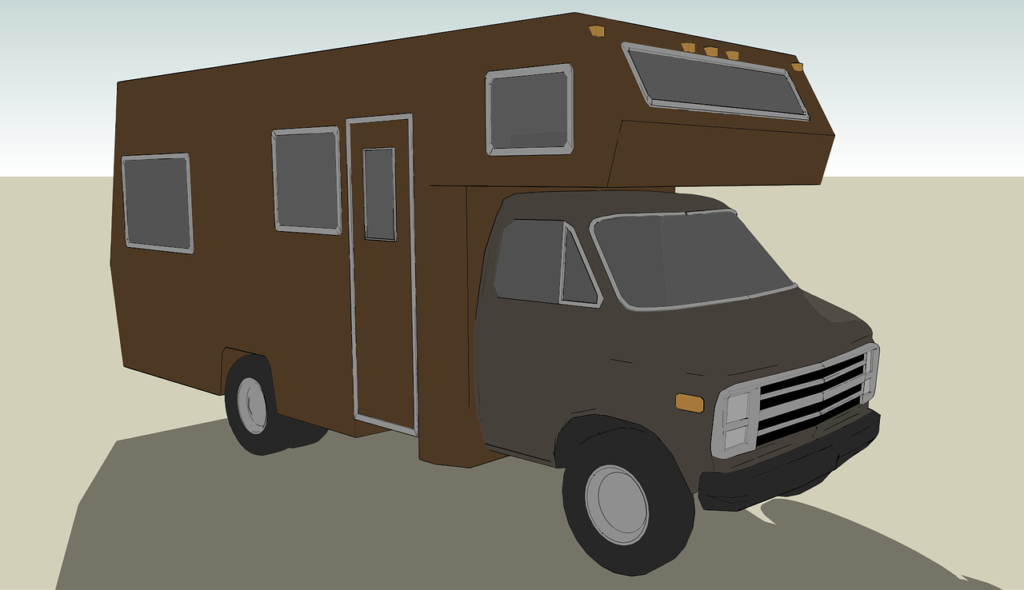
The Court held that Defendant’s camper is a motor vehicle registered with the Secretary of State. While the camper may have a geometric design much like a box, the court reasoned that it was not designed for permanent use. Accordingly, the court held that the restriction was not violated by having a camper on the property because a camper was a vehicle and not a building. Accordingly, a homeowner’s association should carefully review its deed restrictions to ensure that terms are carefully defined and update the deed restrictions when necessary.