Can a court rewrite a Michigan HOA’s lake access easement when neighbors clash over how it is used? For many homeowners associations, lake access is one of the community’s most valuable amenities—and one of its biggest sources of conflict. As more owners purchase boats, paddleboards, and other watercraft, disagreements over docks, swimming areas, parking, and crowds become increasingly common. Boards are often left wondering whether they can adopt new rules, or whether a court can impose restrictions when disputes arise.
The Michigan Court of Appeals recently addressed these questions in Barnard v. J.G. Pray’s Subdivision Homeowners Association, ____ Mich App ____; ___ NW3d ___ (2026) (Docket No. 370541). The decision provides important guidance for associations and lakefront communities by explaining how courts determine the scope of a recorded lake access easement and when long-standing recreational uses are protected.
How the Lake Access Easement Dispute in Barnard Began
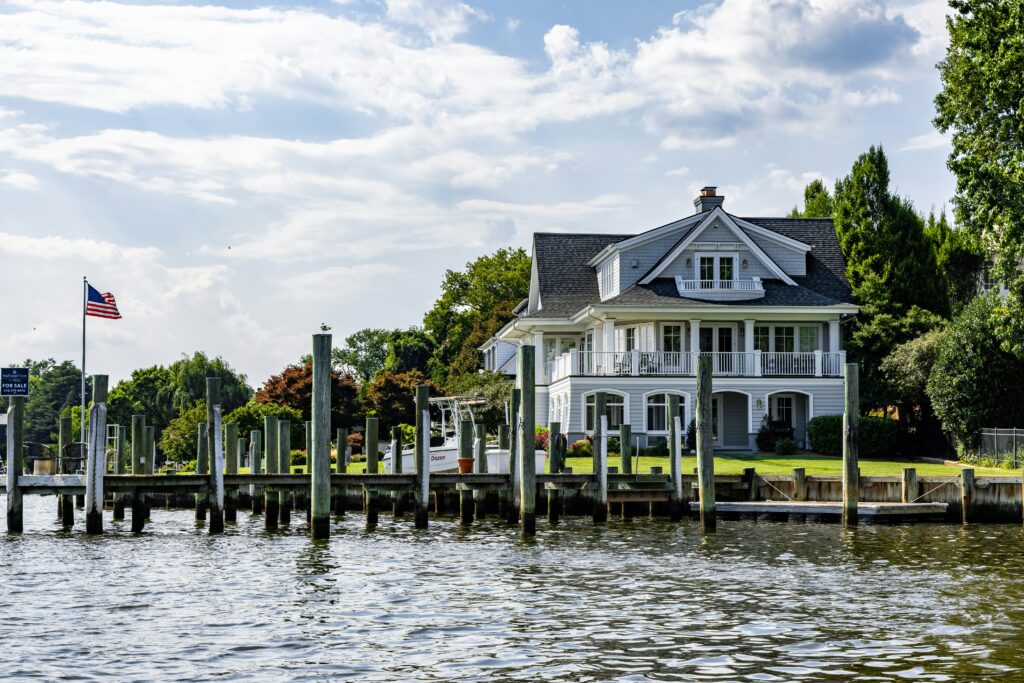
The subdivision at issue was created on Whitmore Lake in 1920. At the same time the subdivision was platted, a warranty deed established a 25-foot-wide easement granting subdivision owners the right to use the lake access strip and “the use of the dock” located in front of the easement. The easement burdened two properties in the subdivision, and the J.G. Pray’s Subdivision Homeowners Association for the purpose of collecting dues and maintaining the grounds of the easement.
The dispute in Barnard arose after the owner of one of the servient properties (i.e., property burdened by the easement) claimed that use of the easement had dramatically increased. The owner alleged that inflatable islands, multiple moored boats, stacked kayaks, golf carts, and larger gatherings interfered with their enjoyment of the property. The owner then filed a lawsuit against the homeowners association and asked the trial court to significantly restrict how subdivision owners could use both the easement and the dock.
The trial court largely agreed. Among other things, it limited the dock to 30 feet, restricted swimming and fishing to one side of the dock, ordered the homeowners association to adopt bylaws incorporating those restrictions, and found the association liable for maintaining a nuisance. The Court of Appeals reversed that decision and remanded the case back to the trial court.
The Language of the Easement Controls Unless It Is Ambiguous
The Court of Appeals’ decision reaffirms the framework Michigan courts use when interpreting easements. Like contracts, easements are interpreted according to the intent of the parties who created them. As a result, courts first look to the plain language of the easement itself. If the language is clear and unambiguous, it must be enforced as written.
The Court of Appeals first examined the language of the 1920 warranty deed that created the easement. Although the deed clearly provided lake access and use of the dock, it did not expressly identify every activity that was permitted or define the full scope of the rights conveyed. Consequently, the Court concluded that the easement was ambiguous regarding the extent of those rights.
Because the easement was ambiguous, the Court turned to extrinsic evidence to determine the intent of the parties. Michigan law permits courts to consider evidence outside the four corners of the easement when necessary to resolve an ambiguity. One form of extrinsic evidence is the historical use of the easement.
The Court of Appeals noted the easement did not contain restrictions on the use or dock length. The evidence established that owners historically used the easement to install and maintain a dock ranging between 20-70 feet. The evidence also established that the accustomed use of the easement included mooring boats, swimming, wading, and congregating—and, during winter months, accessing the frozen lake by snowmobile. This long-standing pattern of use reflected the purpose and scope of the easement.
That historical use proved critical because it confirmed that the easement conveyed more than a mere right of ingress and egress. Relying on established Michigan precedent, including Thies v Howland, 424 Mich 282; 380 NW2d 463 (1985) and Dyball v Lennox, 260 Mich App 698; 680 NW2d 522 (2004), the Court concluded that the easement also conveyed littoral rights associated with the adjoining waters, which provides non-littoral easement holders with unrestricted rights of access to the water to swim, fish, bath, wade, and boat.
Courts Should Not Restrict One Property Owner’s Rights at the Expense of Another
The Court also addressed the trial court’s attempt to resolve the dispute by imposing new restrictions on how the easement could be used. While the trial court sought to balance the competing interests of the lakefront owners and the subdivision owners, the Court of Appeals concluded that several of those restrictions lacked legal support.
Specifically, the Court of Appeals explained that the trial court’s attempt to direct recreational activities to one side of the dock effectively shifted the concentration of those activities closer to another lakefront property owner whose property was likewise burdened by the easement; however, that property owner was not a party to the litigation and had no opportunity to protect his or her interests. As such, the restriction was improper without an opportunity for the owner to be heard.
An HOA Is Not Automatically Liable for a Nuisance It Did Not Legally Cause
Finally, the Court addressed whether the homeowners association could be held liable for maintaining a private nuisance based on the activities occurring at the easement. A private nuisance requires more than the existence of objectionable conduct. A plaintiff must establish that the defendant’s conduct was the legal cause of the alleged invasion of the plaintiff’s use and enjoyment of his or her property.
The evidence showed that the homeowners association’s role was relatively limited. It collected annual dues and coordinated maintenance of the easement. The association did not own the easement, control the day-to-day activities of individual lot owners, or direct how owners exercised their easement rights. Although the servient property owner presented evidence of increased recreational activity, there was no evidence that the Association itself caused or directed the conduct giving rise to the alleged nuisance. The Court of Appeals, therefore, concluded that the association could not be held liable merely because there was no evidence linking the conduct to the association.
The Court’s decision provides important guidance for community associations. Boards have a legitimate interest in promoting the orderly use of common areas and shared amenities, but that interest does not automatically expose the association to liability whenever disputes arise between neighboring property owners. Liability depends on the community association’s own conduct and whether it legally caused the alleged interference.
For boards and property managers, the practical lesson is straightforward. Associations should continue to maintain common property and enforce governing documents where appropriate, while recognizing the limits of their legal responsibility. Simply because an association administers or maintains a shared easement does not mean it is legally responsible for every dispute arising from owners’ lawful use of that easement.
What Barnard Means for Michigan Lakefront Communities
Barnard reinforces several important principles for condominium and homeowners associations managing shared waterfront access. Before adopting rules that restrict the use of a lake access easement, boards should carefully review the language creating the easement. If the easement is ambiguous, courts may look to extrinsic evidence—including decades of historical use—to determine the scope of the rights granted. Associations should therefore exercise caution before adopting restrictions that conflict with established use, as doing so may interfere with vested property rights.
The decision also makes clear that a homeowners association is not automatically liable simply because disputes arise over the use of a shared easement. Although boards have a legitimate interest in maintaining common areas and promoting the orderly use of shared amenities, liability depends on the association’s own conduct and whether it legally caused the alleged interference. Maintaining a shared easement or enforcing governing documents, standing alone, does not make an association responsible for every dispute involving owners’ exercise of their easement rights.
Key Takeaways for Condominium and Homeowners Associations
- Start with the recorded easement. The language creating the easement remains the primary source for determining the rights of easement holders.
- Historical use may define ambiguous easements. When the easement does not clearly describe the scope of the rights granted, courts may consider extrinsic evidence—including decades of consistent use—to determine the grantor’s intent.
- Lake access easements can convey littoral rights. Depending on the language of the easement and the parties’ intent, non-lakefront owners may possess littoral rights, including the right to access and use the adjoining waters for swimming, fishing, wading, boating, and other traditional waterfront activities.
- Courts generally will not rewrite an easement. Restrictions on the use of an easement must be supported by the easement itself and applicable law—not simply by changing circumstances or disputes between neighboring owners.
- Association liability is not automatic. An HOA is not liable for a nuisance simply because individual owners exercise their easement rights. Liability depends on whether the association’s own conduct was the legal cause of the alleged interference.
- Review governing documents and easement rights before adopting new rules. Boards should ensure that any lake access policies are consistent with the recorded easement, historical use, and existing property rights.
For Michigan associations with shared waterfront access, Barnard serves as a reminder that lake access rights are often defined by documents recorded generations ago. Before adopting new restrictions or responding to owner complaints, boards should carefully evaluate the recorded easement, understand how it has historically been used, and consult legal counsel when questions arise. Taking a proactive approach can help protect owners’ property rights while reducing the risk of costly and avoidable litigation.
If your condominium or homeowner association is facing an easement dispute or needs guidance related to an existing, proposed, or new easement agreement, contact the experienced Michigan community association lawyers at Hirzel Law, PLC.