Is a Michigan condominium association liable when an Airbnb guest slips and falls in a common area? After a July 2026 Court of Appeals decision, the answer can be yes. The Court held that a short-term rental guest is an invitee of the condominium association, which means the association owes that guest the highest duty of care under Michigan premises liability law.
Short-term rentals through Airbnb, Vrbo, and similar platforms bring a steady stream of unfamiliar faces into a condominium community. Many associations focus on the usual concerns, such as noise, parking, and turnover. A recent Michigan Court of Appeals decision adds another: the association’s own liability when a short-term rental guest is hurt in a common area.
In Letvin v The Village at Grand Traverse Commons Condominium Association, No. 376558 (Mich App, July 13, 2026), a published opinion issued July 13, 2026, the Court held that an Airbnb guest is an invitee of the condominium association. That status carries the highest duty of care under Michigan premises liability law. Understanding what the ruling says and what it means for your rental rules, insurance, snow and ice contracts, and records can help your association manage risk before a guest gets hurt.
A Real-Life Example: When an Airbnb Guest Slips on the Ice
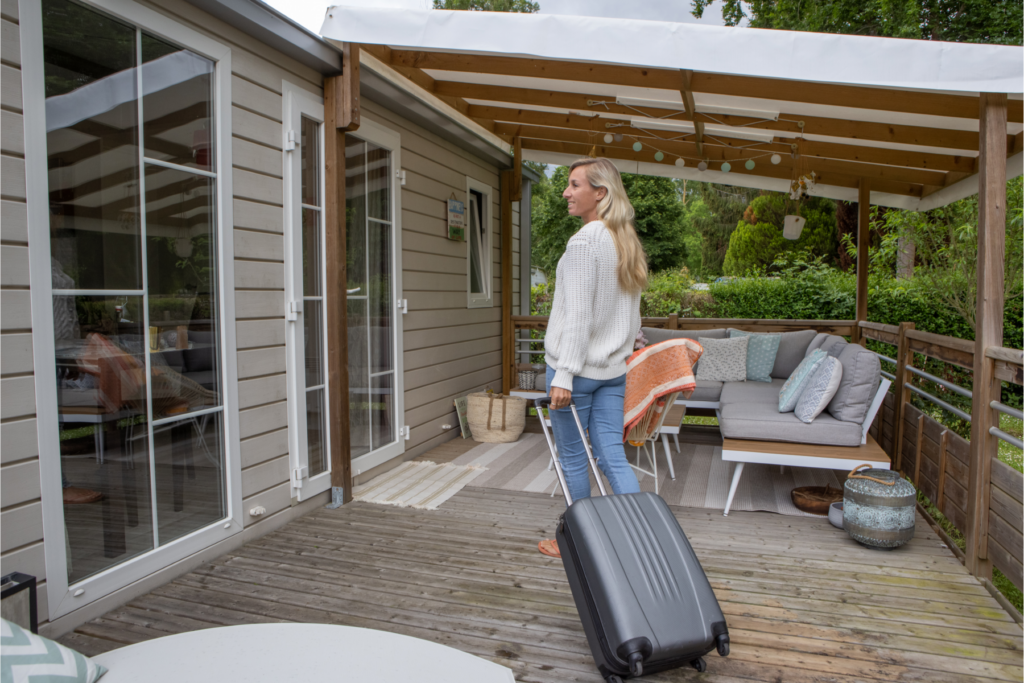
In Letvin, the plaintiff and his wife stayed in a condominium unit they had booked through Airbnb during a January 2023 weekend in Traverse City. On the second evening, the plaintiff walked across a common-area parking lot to meet a ride-share vehicle. His wife noticed the ice and turned to warn him, and he fell, breaking his arm.
The association had hired a contractor, A.M.O. Inc., to remove snow and salt the property. The contract called for plowing when two inches or more of snow accumulated, salting of defined surfaces whenever snow was removed, and additional salting when ice was present or when potential safety issues existed. The contractor was salting during the weekend of the fall. But the plaintiff testified that the lot was largely covered in ice, and photographs taken after the fall showed icy areas.
The record also showed that the association’s Board president testified that the Board took no responsibility for monitoring the contractor’s work, and the contractor’s owner was unaware of anyone at the association who inspected it. The trial court treated the plaintiff as a licensee, relying on an earlier Court of Appeals decision, Gabrielson v Woods Condo Ass’n, and granted summary disposition to the association. The Court of Appeals reversed.
Why Is an Airbnb Guest an Invitee, and What Duty Does the Condominium Association Owe?
Under Michigan law, the duty a property possessor owes depends on the visitor’s status. An invitee is owed the highest level of protection, while a licensee, such as a typical social guest, is owed only a warning about hidden dangers. A visitor generally qualifies as an invitee when the possessor receives a commercial or pecuniary benefit from the visit.
The Court found that benefit here. In Janini v London Townhouses Condo Ass’n (2024), the Michigan Supreme Court compared a condominium association’s relationship with its co-owners to that of a landlord and tenant. The Letvin Court then relied on Stanley v Town Square Cooperative (1993), which reasoned that part of a tenant’s rent is consideration for the right to invite others onto the property. Likewise, part of the fees paid to a condominium association is consideration for maintaining the common areas for owners and their guests. The Court therefore held that Janini abrogated Gabrielson on this point, and that a short-term rental guest is an invitee of the association on the common elements the association maintains.
What Duty Does a Michigan Condo Association Owe Short-Term Rental Guests?
As an invitee, the guest is owed more than a warning. The association must make the premises reasonably safe, which includes inspecting the common areas and, depending on the circumstances, repairing or warning of hazards. For snow and ice, that means taking reasonable measures within a reasonable time after an accumulation.
The Court did not find the association negligent. It held that a jury must decide, because ice remained despite the salting and there was testimony that no one at the association oversaw the contractor’s work. Hiring a contractor did not end the inquiry.
Should Your Condominium Association Restrict Short-Term Rentals?
Letvin does not require an association to restrict short-term rentals, nor does it say that restrictions are advisable. It does, however, change the risk analysis. Associations that permit short-term rentals should assume that guests are owed the highest standard of care, and associations that are considering restrictions should weigh that exposure against owner expectations and the character of the community.
A restriction will not eliminate the duty. Long-term tenants and other guests can still be invitees under Janini and Stanley. A rental restriction may reduce the number of unfamiliar visitors, but the association still needs reasonable snow and ice practices, inspections, and insurance.
How Should Your Condominium Association Review Its Rental Restrictions?
A review of the governing documents is the right starting point. Consider the following:
- Review the master deed and bylaws. Identify any provisions on leasing, minimum lease terms, rental caps, registration, or transient occupancy.
- Consider whether an amendment is appropriate. Options include a minimum rental term, a cap on rentals, or a prohibition on short-term rentals. Any amendment must follow the procedure and voting requirements in your governing documents and the Michigan Condominium Act, so involve counsel early.
- Check local ordinances. Zoning and short-term rental ordinances may already regulate or prohibit the use.
- Require registration and disclosure. If short-term rentals are allowed, consider requiring owners to notify the association of each rental, identify the platform, and provide proof of insurance.
- Make owners responsible for their guests. Confirm that your documents and rules allow the association to hold owners accountable for the conduct of their guests and any resulting costs.
Are Your Insurance Coverage and Liability Limits Adequate?
An increase in the number of people who qualify as invitees makes insurance coverage a priority. Condominium and homeowners associations should:
- Confirm coverage with the broker. Ask whether the master and general liability policies cover claims by short-term rental guests, and whether any exclusion or endorsement limits coverage for transient or commercial rental activity.
- Review policy limits. Evaluate the general liability and umbrella limits in light of the possibility that injured guests may be able to claim invitee status.
- Require owner coverage. Consider requiring owners who rent short-term to carry adequate liability insurance and, where available, to name the association as an additional insured.
- Review indemnification provisions. Confirm that your documents and rental rules appropriately allocate responsibility to owners for the guests they bring onto the property.
- Be cautious about waivers. Rule language or waivers that attempt to disclaim the duty owed to invitees may not be effective. In Janini, the association’s own bylaws assured owners that the premises would be kept safe. Have counsel review any such language.
What Should Your Snow and Ice Contract Say?
The snow and ice contract was central in Letvin. A contract that looks adequate on paper may leave gaps in practice. Such contracts should be reviewed for the following:
- Triggers and scope. A plowing threshold, such as two inches, may leave ice and thin snow untreated. Make sure the contract also requires salting based on observed ice and potential safety issues, and clearly lists every covered surface, including parking lots, walkways, stairs, and entrances.
- Response times. Specify how quickly the contractor must respond after an accumulation and after a report of ice, including during freeze-thaw conditions.
- Inspection duties. Require the contractor to inspect and document conditions, and assign someone at the association to verify that the work was done.
- Insurance and indemnity. Confirm that the contractor carries adequate liability coverage, names the association as an additional insured, and agrees to indemnify the association. Review any limitation-of-liability clauses.
- Board oversight. Testimony that the Board took no responsibility for monitoring the contractor was part of what created a fact question in Letvin. Designate a Board member or management company to oversee performance.
What Maintenance Records Should a Condo Association Keep?
When the question is whether a condominium association acted reasonably and within a reasonable time, records can make a significant difference. Condominium associations should keep:
- Contractor service logs. Record the dates, times, areas treated, and materials applied for each snow or ice event.
- Inspection records. Document winter inspections with dated notes or photographs, even when the contractor has already been on site.
- Complaint and response records. Track complaints from owners, residents, and guests, along with the association’s response.
- Board decisions. Record decisions about snow and ice vendors, budgets, and policies in the meeting minutes.
- A retention policy. Preserve these records through the applicable limitations period and place a hold on them whenever an injury is reported.
The Bottom Line for Michigan Condo Associations
Letvin shows that Michigan courts are looking at the economic reality of condominium living. Condominium associations collect fees to maintain common areas for owners and their guests, and the duty of care follows that relationship. An association that permits short-term rentals should assume its guests are owed a reasonable standard of care and be able to show, through its contracts, inspections, and records, that it met that standard.
You can lower the risk by:
- Reviewing and, where appropriate, updating your rental restrictions
- Confirming that your insurance addresses guest injuries
- Tightening your snow and ice contract
- Assigning Board oversight of the contractor
- Keeping complete maintenance and inspection records
A clear plan and consistent practices help your condominium association keep its common areas safe and demonstrate that it acted reasonably if a claim is made.
Need Help Reviewing Your Association’s Rental Policies and Contracts?
Experienced legal counsel can help condominium associations evaluate short-term rental restrictions, review snow and ice contracts and insurance coverage, and respond to claims arising from injuries in common areas, all while continuing to meet the association’s obligations to owners and the community.